The Search
2008-03-03 16:39 | Posted by Dr Vidagdha Bennett | Permanent Link | Swami Vivekananda
Belur Math
Article by Dr. Vidagdha Bennett
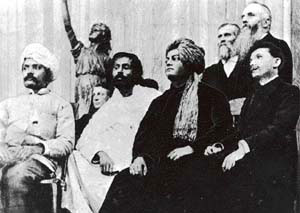
There is an image of Swami Vivekananda that kept recurring to me when I arrived in Kolkata. Not the traditional image of him striding through India as an itinerant monk, dauntless in his quest, nor his fiery addresses at the Parliament of Religions, but something almost heartbreaking – the image of him scaling the locked gate to gain entry to Belur Math, the monastery he himself had created.
The incident occurred towards the end of Swami Vivekananda’s life, when his body had started to break down irretrievably. He had made his last tour to London and America, saying farewell to his dear ones and entrusting the responsibilities of his work to his Gurubhais Abhedananda and Turiyananda. Now, after a long absence, he just wanted to go home – to India, to Bengal, to his room at Belur Math. Unlike his earlier triumphant return, this time Swami Vivekananda did not inform anybody of his impending arrival. In his haste to reach India, he left the other members of his party in Cairo and travelled alone – in itself an unusual occurrence for someone with so many distinguished disciples.
Swami Vivekananda disembarked from his steamer in Bombay and caught the train to Calcutta (now Kolkata), a trip taking upwards of forty hours. Arriving at Howrah Station in the late evening of December 9th, 1900, in the garb of a sahib, he managed to locate a horse carriage for himself and his luggage. Then he started for Belur Math. Alas, when he arrived at last, the monastery was locked up for the night.
Standing outside in the dark, having come so far – truly an epic journey in those days – Swami Vivekananda heard in the distance the ringing of the dinner bell. He hauled his failing body over the gate and hastened to the dining room. His Gurubhais were stunned to see him suddenly appear in their midst. I have it on good authority from Sankar, the great Bengali writer, that Swami Vivekananda was in a jovial mood and sat down for a hearty meal. Sankar also assures us that the gate in question was considerably smaller than the present-day one. Nonetheless, for someone who had essentially come back to India to wait for “the Great Deliverer”, it was an extraordinary feat.
This was the Vivekananda I wanted to know – the man who, having realised God, having conquered the world, was driven to return home; the same Naren who, as a young boy, had run wildly through the streets of Calcutta and the fields beyond to see his Master, Sri Ramakrishna, at Dakshineshwar, arriving with straw in his hair and his clothes in disarray. In actual fact, nothing had changed. When he returned to India in 1900, he was still a boy running towards his Master, only this time he would see him only in the embrace of death. Swami Vivekananda had no wish “to spit out the body” on foreign soil. He was determined to face the end in his own room, on his own terms.
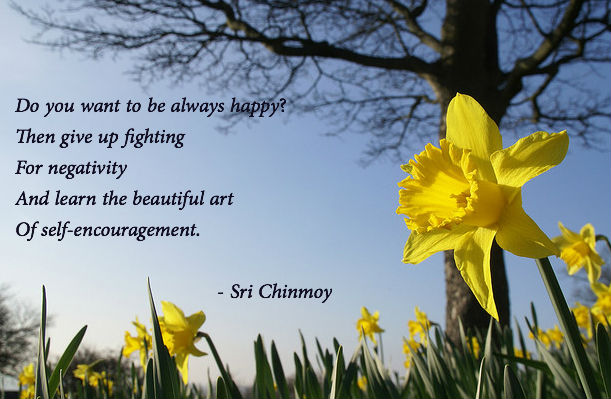
In many respects, my Guru – Sri Chinmoy – had done the same thing on October 11th, 2007, the only difference being that after forty-three years abroad his home was in New York, not India. Sri Chinmoy travelled extensively in the last year of his life – to Bulgaria, Thailand, Norway, Mongolia, San Diego, San Francisco, New Orleans and Russia. Indeed, he was seldom in New York, it seemed. But he chose to give up the body in his own room, on his own terms, returning to it just two weeks before his earth-departure and rarely leaving it in the days and nights that followed.
Perhaps mine was an irrational impulse, caused by an inability to accept Sri Chinmoy’s passing, but I felt that by seeing Swami Vivekananda’s beloved room at Belur Math, I would find some kind of insight. Perhaps I would understand more about these colossal Bengali souls who came to earth to literally shake us out of our torpor, our somnolence, and who then left again so quietly, without any fanfare.
On January 22nd, 2008, the morning after I arrived in Kolkata, I caught a taxi to Belur Math just before dawn, when only the sweepers were about in the streets and the massive span of the Howrah Bridge was largely empty of traffic. My taxi typically ran out of petrol on the approach to the bridge, but fortunately the driver had a plastic water bottle full of petrol in the trunk to see us through. Arriving at the gracious driveway to Belur Math, I could see that a busload of Indian pilgrims had just pulled up. They were intent on going directly to the ghat to bathe. I followed at a different pace. I could discern the Hooghly River in the distance, fingers of mist drifting across its surface. But I was relishing the draughts of cool air rushing into my lungs, the lack of dust, the space to walk along the freshly swept path. I could see flowerbeds laid out with loving care, signs begging visitors to respect the sanctity of the entire area. And it was blissfully quiet. If anybody had approached me, I would have replied in a whisper. But it seemed that I was invisible – a unique experience in the metropolis.
I found myself standing by the river, mesmerised by the bright red disc of the sun as it rose on the other side and the unutterable power of the whole place. This was the land that Vivekananda himself chose and loved, the soil that he had trodden. The Hooghly (Ganga) flows swiftly at this point and its surface appeared silvery in the morning light, flecked here and there with foliage it had gathered along the way.
Turning to the south, I followed the path to the place where Vivekananda’s body had been consigned to flames, near a vilva tree. In place of the original tree, an ancient offspring now grows and a small temple has been erected over the spot. In front of me and behind, monks were walking meditatively, wrapped in shawls against the chill, chanting under their breath, and slipping off their sandals to prostrate at the sacred shrines along the way. I am sure it was a routine they followed every day, but to me it represented an ideal of devotion.
I remembered how Nivedita, grief-stricken, had longed for a sign from her Master as the pyre was lit. Then a small piece of cloth from his ochre robe was carried by the breeze and landed in her lap where she sat on the ground a short distance away, weeping uncontrollably. It is so difficult for the Master so console his dear ones. To some he gives tangible signs, such as Nivedita had. To others he may appear in their dreams. Or the fragrance of his presence may be felt in more subtle ways – a sudden lift of the heart, a wordless inspiration, a profound meditation.
I began to walk northwards along the path towards the monastery building where Vivekananda had his room, his sanctuary. It is on the second storey in the southeast corner and there is a double staircase leading to it from outside, as well as one inside that is used only by the monks. When you reach the stop of the creamy white stairs there are two windows opening into Vivekananda’s room. Neither one has glass, but both have bars. I believe the bars were there also when Vivekananda was alive as it is mentioned that on the occasion of Sri Ramakrishna’s birthday in February 1900, Vivekananda felt very feverish and could not join the monks in their celebrations. So he stood at the window, holding onto the bars as he watched the festivities below.
I completed the reverse image, standing at the nearest window, holding onto the bars and, with tears streaming down my face, devouring each detail of the room inside. It all seemed so familiar. How many times had I had seen this room in my imagination! The graceful curve of the wall of the building on the side nearest the river is highlighted by two feature windows, both with shutters. On this winter morning, the shutters were flung open to reveal the river in all its majesty and a bracing air filled the room. Just in front of the window was Vivekananda’s desk, still with its original blotting-pad, pen, ink and paper. Most importantly, a small photograph of Sri Ramakrishna adorns the desk.
The room contains two beds: a large iron bedstead that looks supremely comfortable, but which Vivekananda used infrequently (it was the gift of one of his Western disciples), and a simple couch. There is also a cot covered with a deerskin on which he liked to sit and meditate. Three different doors open into the room. Between them, at various places, are Swami Vivekananda’s musical instruments, a rack for his clothes and a tall mirror. A tea service is spread out on a small table in anticipation of a summons.
It is a supremely accessible room and one could easily envision Swami Vivekananda, with his expansive personality, writing at his desk, keeping an eye on his brother-monks working outside in the yard or the welfare of his pet animals, calling out for tea or issuing instructions, enveloping the entire Math with his presence. It is a room that literally throbs with Vivekananda’s vibration, even now more than a hundred years later.
As I gazed at the room, I saw my own Master’s room in New York, as if overlaid on the retinas of my eyes: Sri Chinmoy’s chair, around which everything he needed was arrayed in a widening circle – telephone, pens, papers, books, musical instruments, dumbbells, drawing supplies and so forth. This room was the hub of his worldwide mission. There he meditated for hours on end, dictated poems, composed songs, played the esraj and other instruments, drew millions of birds, spoke on the telephone, conversed with his disciples, answered their questions. Ultimately, it was there that our Master, still at heart a Shakpura village boy, heard the call to go Home.
He is gone and we are left behind, gazing through bars in foreign lands, searching for his face in the faces of strangers. I had thought the search was finite, a phase of loss. Standing at Belur Math, it came to me that as long as we are granted time on this earth, this search can never have an end.
Related Links